

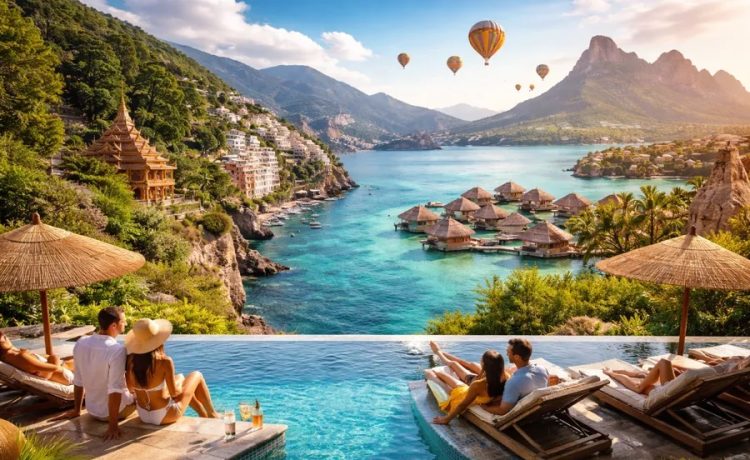
The traditional concept of luxury travel is heavily tied to exorbitant price tags. For decades, the travel industry has conditioned consumers to believe that experiencing infinity pools, private butlers, Michelin-level gastronomy, and spa sanctuaries requires maxing out credit cards or draining savings accounts. However, this assumption ignores the realities of global economics. By understanding currency exchange rates, variations in the local cost of living, and the strategic timing of the tourism market, discerning travelers can secure world-class, five-star experiences for the exact same budget they would spend on a mediocre three-star weekend domestic trip.
True luxury is not defined by how much money you spend, but by the quality of the service, the exclusivity of the environment, and the attention to detail. Across the globe, there are specific destinations where high-end hospitality markets are thriving, yet the baseline economic structure allows international visitors to access absolute opulence at a steep discount. If you are willing to look beyond London, Paris, and New York, a world of accessible indulgence awaits.
Southeast Asian Elegance at Unbeatable Margins
Southeast Asia has long been a backpacker’s paradise, but its luxury sector is arguably the most competitive and high-performing on the planet. The hospitality standards here often exceed those found in Western Europe, driven by a deeply ingrained cultural emphasis on guest service.
Da Nang and Hoi An, Vietnam
Vietnam has quietly evolved into one of the most formidable luxury destinations in the world. The central coast, stretching between the modern skyline of Da Nang and the lantern-lit historic streets of Hoi An, is lined with expansive, ultra-luxurious resorts. Here, booking a private, ocean-facing villa with a dedicated plunge pool and daily in-room breakfast service costs roughly the equivalent of a standard, viewless corporate hotel room in a major American city. The culinary scene perfectly mirrors this value. You can secure reservations at high-end fusion restaurants in heritage buildings, enjoying multi-course tasting menus crafted by international chefs, all for the price of a casual dinner back home.
Kuala Lumpur, Malaysia
When it comes to urban luxury, Kuala Lumpur operates in a league of its own regarding price-to-value ratios. The Malaysian capital features one of the highest concentrations of premium global hotel brands, but due to high inventory and intense local competition, nightly rates remain staggeringly low. It is entirely possible to book expansive suites at legendary legacy properties—complete with marble soaking tubs, skyline views of the Petronas Towers, and access to exclusive club lounges pouring premium evening cocktails—for under two hundred dollars a night. Furthermore, the city features high-end shopping districts and rooftop dining venues that deliver a distinctly cosmopolitan five-star atmosphere without the crippling markup found in Singapore or Tokyo.
Old World European Grandeur on a Dime
The architectural splendor and aristocratic history of Europe are not confined to Western borders. By shifting your focus just a few hundred miles to the east, you can immerse yourself in imperial grandeur without the punishing euro exchange rate.
Budapest, Hungary
Budapest visually rivals Vienna and Prague with its sweeping bridges, neo-Gothic parliament, and opulent coffeehouse culture. Because Hungary operates on the forint rather than the euro, your purchasing power stretches remarkably far. The city is famous for its thermal baths, but rather than queuing for public entry, the budget-conscious luxury traveler can book private, full-day spa rituals at historic facilities for a fraction of what a basic massage costs in London. The high-end hotel market is housed within meticulously restored 19th-century palaces. Guests enjoy vaulted ceilings, crystal chandeliers, and white-glove service. Budapest also boasts an emerging haute cuisine scene, where securing a table at a Michelin-starred establishment is both relatively easy and surprisingly affordable, allowing you to indulge in avant-garde interpretations of classic Hungarian cuisine paired with exceptional regional wines.
Latin American Sophistication
For North American travelers, Latin America offers the distinct advantage of minimal jet lag, operating on similar time zones while providing a completely distinct cultural and economic landscape.
Mendoza, Argentina
For the luxury traveler with an affinity for enology, Mendoza is a revelation. Nestled in the foothills of the snow-capped Andes, this region is the beating heart of Argentine wine country. Favorable exchange rates make this destination a haven for high-end consumption. The ultimate way to experience Mendoza is by booking a stay at an exclusive wine lodge located directly in the Uco Valley. These boutique properties often feature sleek, modernist architecture integrated into the vineyards, with private outdoor soaking tubs and wood-burning fireplaces. Private sommelier-led tastings and multi-course, fire-cooked dining experiences that would cost thousands in Napa Valley are available here for remarkably modest sums. You can hire a private driver for the duration of your stay to navigate the vineyards, ensuring a seamless, bespoke experience from start to finish.
Cartagena, Colombia
Cartagena offers a vibrant, Caribbean approach to luxury within the walls of a beautifully preserved colonial city. The high-end accommodation market here is dominated by boutique luxury hotels housed in restored 17th-century mansions. These properties typically feature lush interior courtyards, rooftop pools overlooking the historic center, and highly personalized service due to their small room counts. Beyond the accommodation, the true luxury of Cartagena lies in private exploration. Chartering a private yacht or catamaran for a day trip to the Rosario Islands—complete with a dedicated crew, fresh seafood prepared on board, and secluded snorkeling spots—is an entirely accessible luxury for those traveling on a moderate budget.
North African Exclusivity
North Africa provides an intoxicating blend of sensory richness, ancient history, and meticulous craftsmanship, resulting in a luxury travel experience that feels both exotic and deeply pampering.
Marrakech, Morocco
Marrakech is designed to be experienced from the inside out. The bustling, chaotic energy of the Medina is instantly silenced the moment you step through the heavy wooden doors of a luxury Riad. These traditional Moroccan homes, centered around tranquil interior courtyards with trickling fountains and citrus trees, operate as elite boutique hotels. Even the most prestigious Riads offer exceptional value, frequently including lavish, multi-course breakfasts served on private rooftop terraces. The pinnacle of Marrakech luxury is the traditional hammam spa experience. Instead of booking a standard hotel massage, you can reserve private, hours-long bathing and exfoliation rituals utilizing black soap, rhassoul clay, and argan oil in stunning, mosaic-tiled sanctuaries.
The Strategy of Acquiring Discounted Luxury
Knowing where to go is only half the equation; knowing how to book is what secures the absolute best value. To truly maximize your travel budget without compromising on the five-star experience, you must adopt a few strategic booking habits.
First, target the shoulder season. Traveling just two weeks before or after a destination’s peak tourist season can result in nightly rate drops of up to forty percent at elite properties. The weather remains largely favorable, but the crowds thin out, and hotel management becomes highly motivated to upgrade guests to premium suites simply to fill inventory.
Second, seek out independent luxury collectives rather than relying strictly on legacy corporate brands. Many independent boutique hotels offer vastly superior, personalized service and higher-end local amenities because they are not constrained by global corporate profit margins. Look for properties affiliated with independent luxury portfolios, which rigorously vet their member hotels for five-star quality but often operate at a lower price point than household-name mega-resorts.
Finally, leverage geographic currency arbitrage. Always pay for your accommodations, private tours, and high-end dining in the local currency rather than allowing dynamic currency conversion to charge you in US dollars. While the fee might seem minimal on a single meal, applying it to a week of five-star living will quietly erode your budget. By combining geographic knowledge with smart booking tactics, you elevate your travel lifestyle permanently, proving that world-class luxury is an acquired skill rather than an exclusive privilege.