

For decades, the benchmark for a five-star vacation was defined by visible excess. The global hospitality industry equated true luxury with towering, gold-leafed lobbies, fleet upon fleet of imported supercars idling at the valet, and heavily branded amenities designed to clearly broadcast a guest’s financial status to any onlookers. It was an era defined by conspicuous consumption, where the value of a resort was often measured by its sheer scale and its immediate recognition on social media.
However, a profound cultural correction is currently sweeping through the upper echelons of travel. The ultra-wealthy and discerning travelers are actively retreating from performative opulence, pivoting instead toward a philosophy known as “quiet luxury.” This shift represents a fundamental maturation in how high-net-worth individuals spend their leisure time. Today, the ultimate status symbol is no longer being seen in the right places; it is the ability to disappear entirely into environments of uncompromising quality, absolute privacy, and meticulous, understated elegance.
The Evolution of Wealth and Travel Preferences
The pivot toward quiet luxury is largely a reaction to the oversaturation of the “Instagrammable” aesthetic. When striking, heavily designed visual moments became easily accessible and endlessly replicated across the internet, they inherently lost their exclusivity. The true luxury consumer no longer wants to vacation in a highly trafficked backdrop designed for public consumption. They are seeking spaces that protect their anonymity and offer refuge from the hyper-connected, relentlessly noisy modern world.
Furthermore, the demographics of wealth have shifted. The modern affluent traveler often values time, mental clarity, and authentic well-being far above ostentatious displays of capital. They are willing to pay extraordinary premiums not for crystal chandeliers, but for untainted isolation, vast expanses of private acreage, and the absolute absence of crowds. In this new paradigm, exclusivity is defined by what a resort deliberately leaves out—noise, wait times, rigid schedules, and other people—rather than what it packs in.
Architectural Discretion and Environmental Integration
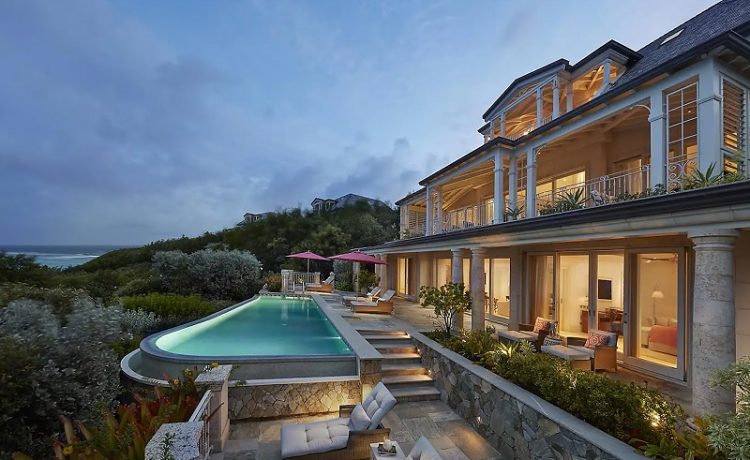
The physical manifestation of quiet luxury begins with the architecture of the resort itself. The era of the imposing, monolithic mega-hotel dominating a coastline is rapidly fading. In its place, high-end developers are prioritizing biophilic design, crafting properties that disappear seamlessly into their natural surroundings.
From the deserts of Utah to the coastal jungles of Costa Rica, the most exclusive new resorts are comprised of low-slung, standalone pavilions or deeply secluded villas. These structures do not conquer the landscape; they submit to it. Rooflines mimic the natural topography, and the boundaries between indoor and outdoor living spaces are entirely dissolved through the use of massive, retractable glass walls and open-air courtyards.
Tactile Authenticity Over Synthetic Glamour
Inside these spaces, quiet luxury speaks through tactile authenticity rather than visual flash. High-gloss marble and heavy velvet have been replaced by materials sourced directly from the local environment. You will find unpolished limestone, sustainably harvested indigenous woods, hand-troweled plaster walls, and organic linen upholstery.
The luxury lies in the rigorous craftsmanship and the obsessive attention to detail. A dining table might appear perfectly simple at first glance, but upon closer inspection, it is a masterclass in custom, peg-and-hole joinery created by a local artisan. The color palettes are intentionally muted, relying on earth tones that soothe the nervous system rather than bold, contrasting colors meant to dazzle the eye. The aesthetic is deliberately restrained, requiring the guest to slow down and physically interact with the space to truly appreciate its value.
The Invisible Art of Hyper-Personalized Service
In the past, luxury service was often performative and highly visible. It involved phalanxes of bellhops, white-gloved butlers hovering at the edge of the dining room, and rigid, formal protocols. Quiet luxury completely upends this model in favor of intuitive, invisible service.
Modern high-end resorts utilize deep data profiling and intense staff training to anticipate a guest’s needs before they ever have to articulate them, while simultaneously remaining entirely out of sight. A guest might leave their villa for a morning hike and return to find their hiking boots silently cleaned and dried, the exact brand of sparkling water they prefer restocked in the refrigerator, and the room temperature subtly adjusted to account for the afternoon heat.
This level of service also demands the complete elimination of operational friction. There are no reception desks or formal check-in times. Guests are whisked straight to their accommodations upon arrival, where the necessary administration is handled effortlessly over a casual welcome drink. There are no set breakfast hours; if a guest wishes to sleep until noon and order a full, multi-course morning meal to be served on their private terrace at two in the afternoon, it is executed without a moment of hesitation or logistical pushback.
Wellness as the Ultimate Status Symbol
Perhaps the most significant indicator of the quiet luxury movement is the transformation of the resort spa. The traditional menu of deep-tissue massages and basic facials is no longer sufficient for travelers who view their physical and mental health as their most valuable assets. High-end resorts have evolved into comprehensive wellness sanctuaries, offering highly clinical, scientifically backed modalities in environments of absolute serenity.
Longevity and Cognitive Restoration
The focus has shifted from temporary relaxation to long-term longevity and cognitive restoration. Guests at quiet luxury properties now have access to hyper-baric oxygen chambers, intravenous vitamin infusions customized to their unique blood panels, and clinical-grade sleep therapy programs.
These resorts often employ teams of on-site functional medicine doctors, nutritionists, and mindfulness experts who work collaboratively to map a guest’s biometric data. The goal is not just to pamper the guest for a weekend, but to fundamentally optimize their biology and mental state. Silence itself has become a premium amenity. Many of these properties feature extensive silent retreats, digital detox programs where devices are physically locked away upon arrival, and vast, meditative gardens where human speech is strictly prohibited.
Culinary Integrity and Hyper-Local Sourcing
The dining experience within the quiet luxury sector has undergone a similar stripping away of pretense. The sprawling, wasteful international buffet and the theatrical, smoke-and-mirrors tasting menu are being rapidly replaced by a deeply honest, hyper-local approach to gastronomy.
The wealthiest travelers can eat at Michelin-starred restaurants in any major city whenever they choose. When they travel to a remote resort, they want culinary integrity that is directly tied to the terroir of their destination. Executive chefs at these properties are acting more as curators and foragers. They are abandoning imported luxury ingredients like Beluga caviar and French truffles in favor of line-caught fish sourced that morning from a neighboring village, or heirloom vegetables pulled directly from the resort’s own regenerative farm.
The presentation is unpretentious but executed with flawless precision. Meals are frequently served in private, highly intimate settings—a single table set in the middle of a working vineyard, or a bespoke picnic arranged on a secluded, inaccessible stretch of beach. The culinary narrative is about purity, seasonality, and a profound respect for the regional ecosystem.
The rise of quiet luxury is not a fleeting hospitality trend; it is a permanent evolution in the psychology of the high-end consumer. It recognizes that in a world defined by constant digital surveillance, noise, and artificiality, the ultimate luxury is the freedom to simply exist in an environment of total peace. By trading the loud, the flashy, and the performative for the intuitive, the authentic, and the unseen, the world’s finest resorts are redefining what it means to truly escape.


