

Introduction: The Call Beyond the Familiar
Adventure. The very word stirs something deep within us—a primal echo of curiosity and courage that no age, no comfort, no modern convenience can quite hush. Adventure is not simply about perilous mountain ascents or remote jungles teeming with hidden life; it is a way of seeing the world, of stepping deliberately beyond the rim of the ordinary to discover something larger than ourselves. In an age when most corners of the map are charted and satellite imagery shrinks distance to mere pixels, the true spirit of adventure remains delightfully uncontainable.
A Brief History: Humanity’s Innate Itch to Roam
From the moment our ancestors first walked upright, they walked away—from safety, from certainty, from what they knew into what they did not. Ancient Polynesians navigated thousands of miles of open ocean guided only by stars and the swell of the waves. Explorers crossed frozen tundras and unforgiving deserts long before GPS or Google Earth. Each generation has birthed its own brand of adventurer, from the sea captains of the Age of Discovery to the astronauts who gazed back at Earth from the moon’s stark surface. Though the context changes, the impulse remains unchanged: to test the edges of the possible.
Modern Adventure: A Broader, More Personal Frontier
Today, adventure has evolved beyond the image of rugged explorers hacking through undergrowth with machetes. While some still chase extremes—scaling sheer rock faces or plunging into cavernous depths—others find their adventures closer to home, in experiences that stretch the mind and spirit as much as the body.
Types of Adventure: From Thrill-Seeking to Soul-Searching
Adventure wears many faces, each as valid as the next.
Physical Adventure
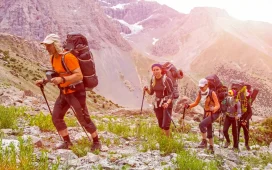
This is the realm of mountaineers, deep-sea divers, and ultra-marathoners—those who push the limits of endurance and bravery.
-
Climbing Remote Peaks: Conquering the untouched flanks of lesser-known mountains.
-
Underwater Exploration: Diving to hidden reefs or ancient shipwrecks.
-
Long-Distance Challenges: Crossing continents on foot or by bicycle, testing the stamina of body and mind.
Cultural Adventure
For many, adventure means stepping into unfamiliar cultures, breaking bread with strangers, and dissolving the boundaries that divide us.
-
Immersive Travel: Living with indigenous communities far from urban lights.
-
Learning a New Language: A mental expedition that opens doors to new ways of thinking.
-
Volunteering Abroad: Giving time and skills in places that test one’s assumptions and broaden perspectives.
Inner Adventure
Not all adventures are geographic. Some are deeply interior—journeys of the soul that take courage of a different kind.
-
Spiritual Pilgrimages: Walking the Camino de Santiago, meditating in a Himalayan monastery.
-
Creative Quests: Setting out to write a novel in an unfamiliar city, painting on a distant coastline.
-
Personal Transformation: Shedding an old life for a new one, trusting the road to reveal the next step.
Why Adventure Matters More Than Ever
In our digital age, where so much of life can be lived vicariously through screens, adventure demands that we stand up, go out, and engage with reality in all its raw, unscripted beauty. It teaches us humility—no mountain or ocean bends to human arrogance. It cultivates resilience; when plans unravel in the wilderness, we learn to improvise and endure. Most of all, adventure renews our sense of wonder, a priceless gift in an era dulled by routine and convenience.
The Personal Rewards of Seeking the Unknown
The benefits of adventure are neither fleeting nor trivial.
-
Perspective: New landscapes and cultures stretch our worldview, revealing how small and precious our own patch of the Earth really is.
-
Connection: Adventures often forge deep bonds—fellow climbers roped together, strangers who become friends when a storm traps everyone under the same shelter.
-
Growth: True adventure always transforms us, chiseling away fear and complacency, replacing them with confidence and a profound trust in our own adaptability.
How to Cultivate an Adventurous Spirit Daily
Adventure does not always require a passport or months of planning. Small, intentional acts can breathe the same vitality into daily life.
-
Try New Paths: Take an unfamiliar route to work or walk a trail you’ve never explored.
-
Say Yes More Often: Accept invitations that nudge you outside your comfort zone.
-
Unplug Regularly: Leave your phone behind for an afternoon, wander without an agenda, and let the day unfold on its own terms.
-
Learn Constantly: Pick up a skill that frightens you—public speaking, tango, pottery. Fear is often the clearest sign you’re on the cusp of adventure.
Responsible Adventuring: Leaving Only Footprints
Adventure, when careless, can harm the very places that make it possible. As more people chase remote experiences, the burden on fragile ecosystems grows heavier.
Thoughtful adventurers tread lightly.
-
Respect Local Cultures: Learn before you go. Listen more than you speak.
-
Leave No Trace: Take everything you brought in back out with you.
-
Support Local Economies: Choose local guides, family-run lodges, and community-based experiences.
-
Travel Mindfully: Offset your carbon footprint when you can, and opt for low-impact transport.
Conclusion: Answering the Call
At its heart, adventure is about saying yes to the unknown. It is the leap of faith into dark forests and distant lands, but also into hidden corners of ourselves. It reminds us that comfort, while pleasant, rarely writes the stories we long to tell later. It whispers that life’s edges are where we find our sharpest truths.
So whether your next adventure is to cross an ocean or merely cross the street to greet a new neighbor, remember this: the world remains vast, waiting, wild. And no matter how much we think we know, there will always be another horizon, just out of reach, calling us to come and see for ourselves.